
Quick Answer: Crown molding installation in Deerwood, Jacksonville FL typically costs between $5 and $15 per linear foot installed, depending on profile complexity and ceiling height. A licensed handyman or remodeling contractor can complete most standard rooms in one to two days, delivering a finished look that adds measurable value to Deerwood homes in one of Jacksonville's most established neighborhoods.
Key Takeaways
- Crown molding adds visual height and elegance to Deerwood homes, especially in formal living rooms, dining rooms, and primary suites.
- Florida's humidity requires moisture-resistant materials or proper sealing to prevent warping and joint separation over time.
- Installation costs in Jacksonville range from $5 to $15 per linear foot depending on profile, material, and room complexity.
- Most homeowners get the best results hiring a professional for rooms with cathedral ceilings, bay windows, or outside corners.
- WSJ Remodeling, Handyman & Pool Services holds a 5.0-star Google rating based on 135 verified reviews and serves Deerwood and surrounding Jacksonville neighborhoods.
There is a reason Deerwood remains one of Jacksonville's most sought-after addresses. The tree-lined streets, the golf course views, and the carefully maintained homes create a neighborhood identity rooted in quiet sophistication. But inside many of those homes, there is a detail that separates the rooms that feel truly finished from the ones that feel almost there: crown molding.
Crown molding is one of the highest-return interior upgrades a Jacksonville homeowner can make. It frames a room the way a mat frames a painting, giving the space a sense of intention and craftsmanship. In Deerwood's mix of 1990s traditional homes and newer custom builds, the right crown molding profile can honor the home's original architecture or elevate it into something more current.
This guide covers everything Deerwood homeowners need to know before starting a crown molding project, from choosing the right profile for your ceiling height to navigating Florida's humidity with the right materials, to understanding exactly what a professional installation should cost and include.

What Is Crown Molding and Why It Matters in Jacksonville Homes
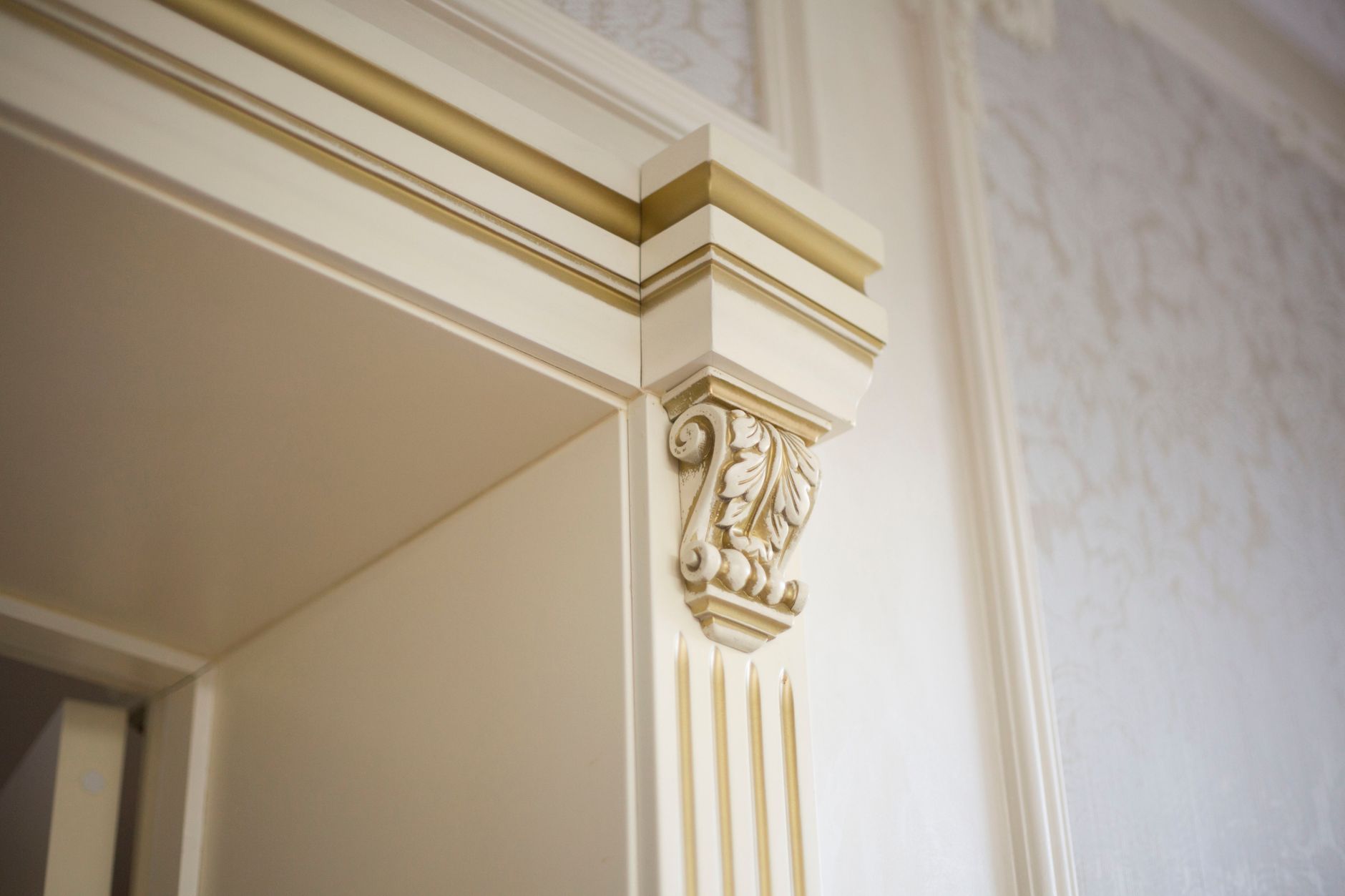
Crown molding is a decorative trim that bridges the gap between a wall and the ceiling. It sits at an angle, typically between 38 and 52 degrees, creating a transition that draws the eye upward and makes rooms feel taller and more formal. It is one of the oldest architectural details in residential construction, found in homes dating back centuries and still considered a mark of quality craftsmanship today.
In Jacksonville, crown molding carries particular relevance because so much of the housing stock was built rapidly during the 1980s and 1990s boom years. Builders moved fast and often skipped decorative details like molding to control costs. That means a large percentage of Deerwood homes, even substantial ones, were delivered with flat, unfinished ceiling transitions. Adding crown molding today is less a luxury and more a correction.
The National Association of Home Builders consistently identifies interior trim work, including crown molding, as one of the top features buyers notice and value during home tours. In a competitive Jacksonville real estate market, that perception translates directly into asking price and days on market.
Beyond resale, crown molding simply makes a home more enjoyable to live in. It is one of those changes where homeowners often say they notice it every single day, in a way that a new appliance or a fresh coat of paint rarely achieves.
Crown Molding Design Ideas for Deerwood Jacksonville Homes
Deerwood homes span a range of architectural styles, from traditional brick colonials and Mediterranean-influenced stucco homes to more transitional interiors that have been updated over the years. The design ideas below are organized by both style and ceiling height, which are the two factors that most influence which crown molding profile will look appropriate.
Traditional and Colonial Profiles
Deerwood's older homes, particularly those built in the early 1990s near the golf course, tend toward traditional architecture with formal dining rooms and living rooms. These spaces benefit from a larger, more detailed crown profile, something in the 4.5 to 6.5-inch range with cove and ogee curves. Stacked molding, where two or three separate pieces of trim are layered to create a deeper, more complex profile, is especially effective in rooms with 9-foot or taller ceilings.
Classic white paint is the most common finish choice and for good reason. It provides crisp contrast against warm wall colors like greige, navy, or sage, which are popular in Deerwood interiors right now. If you want the molding to recede and create a softer look, painting it the same color as the ceiling is a valid design choice that still adds architectural interest without visual weight.
Transitional and Contemporary Profiles
For Deerwood homes with updated open-concept layouts or more modern interiors, a simpler crown profile often works better. A flat or slightly curved 3 to 4-inch profile creates a clean line without the fussiness of a traditional built-up design. This approach works especially well in kitchens, great rooms, and primary bedrooms where the aesthetic is more relaxed.
Some homeowners in newer Nocatee and St. Johns homes have popularized the coffered ceiling look, which pairs crown molding with beams or recessed panels to create a grid effect on the ceiling. This is a more involved project but produces a dramatic result in great rooms and home offices. If you are interested in this approach, check out what our team has done for clients throughout our Jacksonville service areas.
Craftsman and Coastal Profiles
Jacksonville's proximity to the coast influences interior design throughout the region, including in inland neighborhoods like Deerwood. A craftsman-inspired crown profile, which is typically simpler and more angular than a traditional ogee design, pairs well with shiplap accents, natural wood tones, and the casual-elegant aesthetic many Jacksonville homeowners prefer.
Coastal interiors tend to favor painted trim in bright white or soft off-white against walls painted in soft blues, warm whites, or sandy neutrals. A 3.5 to 5-inch craftsman crown in this palette reads as fresh and appropriate for Florida living without feeling overly formal.
Material Choices for Florida's Climate
This is where Jacksonville homeowners need to pay close attention. Florida's humidity, which averages around 75 percent year-round, creates real challenges for certain crown molding materials. Solid wood crown molding is beautiful and takes paint extremely well, but it is also the most susceptible to expansion, contraction, and warping in a humid climate. If your HVAC system is well-maintained and your home stays at a consistent temperature, wood is fine. But in rooms that experience temperature swings, like sunrooms or spaces with large windows, wood can develop joint gaps over time.
Medium-density fiberboard, or MDF, is the most popular crown molding material in Jacksonville for good reason. It is dimensionally stable, takes paint beautifully, and costs less than solid wood. It does absorb moisture if exposed to water directly, so it is not ideal for bathrooms or laundry rooms without proper priming and sealing.
Polyurethane foam crown molding has improved significantly in quality and is a genuine option for high-humidity spaces or areas prone to moisture. It does not warp, it is lightweight, and it is easy to install. The trade-off is that it does not have the same solid feel as wood or MDF and requires careful painting to avoid a plastic appearance.
Common Mistakes Jacksonville Homeowners Make With Crown Molding
Crown molding looks simple from a distance. It is a piece of trim on the wall. But the installation involves compound angle cuts, precise measurements, and an understanding of how materials behave over time. These are the mistakes we see most often in the Deerwood area.
Choosing the Wrong Profile Scale for the Room
A 2.5-inch crown molding in a room with 10-foot ceilings looks timid and lost. A 6-inch profile in a bedroom with standard 8-foot ceilings looks heavy and oppressive. The general rule is to add the wall height to the ceiling height, divide by a proportional factor, and select a profile in that range. Your installer should be walking you through this conversation before any material is purchased.
Skipping the Humidity and Acclimation Step
Any wood or MDF crown molding should be delivered to the home and allowed to acclimate in the space for at least 24 to 48 hours before installation. Jacksonville's humidity means that material shipped from a warehouse in a drier environment will expand slightly once inside your home. Installing without acclimating is one of the primary causes of joint gaps appearing six months after installation. The Florida Building Commission provides guidance on material performance standards in humid climates that are worth understanding for any interior renovation project.
Using Too Little Caulk, or None at All
In Florida, every crown molding joint and every transition point where molding meets wall or ceiling needs to be properly caulked with a paintable, flexible caulk. Skipping this step leads to visible gaps within months as the material expands and contracts with the seasons. Many DIYers also skip caulking the back side of the molding before pressing it to the wall, which allows air movement and speeds up joint separation.
Attempting Outside Corners Without Practice
Inside corners can be coped or mitered. Outside corners require a precise compound miter cut that factors in both the spring angle of the molding and the angle of the corner itself. In older Deerwood homes, corners are rarely perfectly 90 degrees. An off-angle corner means the cut needs adjustment, and getting that wrong by even two degrees results in a visible gap that is difficult to fix without restarting the cut. Outside corners are where most DIY crown molding projects run into serious trouble.
Painting Before Nailing or Nailing Poorly
Some homeowners pre-paint crown molding to save time, then discover the nail gun creates splits or the nail holes need significant filling, requiring sanding that damages the painted surface. The correct sequence is: install, fill nail holes, prime, caulk all joints, then paint. Skipping any of these steps produces a result that looks handmade in the worst sense of the word.
DIY vs. Hiring a Professional in Jacksonville
This is an honest assessment. Crown molding is one of those projects that sits right on the line between ambitious DIY and professional territory, and where you land depends on your specific situation.
Consider DIY if: You are working in a rectangular room with standard 8-foot ceilings, you have experience using a miter saw, and you have a full weekend to dedicate to the project including practice cuts. A single bedroom or small office with no outside corners is a reasonable DIY project if you take your time and do not rush the caulking and painting steps.
Hire a professional if: Your room has cathedral or vaulted ceilings, which require compound angle calculations that change at every point along the slope. Hire a professional if your room has outside corners, bay windows, archways, or any non-rectangular feature. Also hire a professional if you want the project done in one to two days without the risk of wasted material and visible mistakes at every corner.
WSJ Remodeling, Handyman & Pool Services has completed thousands of interior trim projects across Jacksonville, including many Deerwood homes. With a 5.0-star Google rating based on 135 verified reviews, our team brings the kind of experience that turns a potentially stressful project into a clean, fast result. You can see the neighborhoods we cover at our Remodeling & Handyman in Mandarin and Remodeling & Handyman in San Marco & Southbank pages.
The honest math on DIY versus professional: if you factor in the cost of a miter saw rental or purchase, the wasted material from bad practice cuts, the extra time spent fixing mistakes, and the risk of a final result that is visible every day in your home, the professional option is often the better investment, especially for any room you consider a showcase space in your home.
What to Expect: Cost Breakdown for Jacksonville
Crown molding costs in Jacksonville vary based on profile complexity, material choice, room geometry, and ceiling height. Here are realistic ranges based on current market conditions in the Deerwood and surrounding areas.
Basic MDF profile, standard rooms: $5 to $8 per linear foot installed. This includes material, labor, filling, caulking, and priming. Paint is typically a separate cost unless bundled.
Mid-range profiles with coped corners: $8 to $11 per linear foot installed. This range covers rooms with multiple inside corners, standard ceiling heights up to 10 feet, and mid-complexity profiles in the 4 to 5-inch range.
Premium built-up or stacked profiles: $11 to $15 per linear foot installed. This range applies to rooms with stacked molding assemblies, high ceilings above 10 feet, rooms with outside corners or complex geometry, or premium solid wood materials.
Typical room totals: A standard 12 by 14-foot bedroom runs approximately 52 linear feet of crown. At mid-range rates, expect $415 to $570 for that room. A formal dining room with a coffered ceiling addition or decorative trim elements can reach $1,200 to $2,500 depending on complexity.
These costs represent an investment, not just an expense. Crown molding consistently improves the perceived quality and value of a home. Real estate professionals in the Jacksonville market regularly point to interior trim work as a differentiator in how quickly homes sell and at what price point. For Deerwood homeowners planning to list within five years, the return on a professional crown molding installation is well above average for interior upgrades.
Pro Tips from Our Jacksonville Team
These are the things we have learned from working in Deerwood and across Jacksonville's established neighborhoods. They are not things you will find in a general how-to article.
Measure for Florida wall variance. Jacksonville homes, especially those built in the 1980s and 1990s, often have walls that are not perfectly plumb. Before cutting a single piece of crown, we check every wall and ceiling angle with a digital angle finder. Even a one to two degree variance changes the miter angle enough to produce a visible gap at an outside corner. This is not the same as homes in drier climates where materials are more stable over decades.
Use paintable, flexible caulk everywhere. Standard acrylic caulk becomes brittle in Florida's temperature cycling, especially in rooms with direct afternoon sun exposure. We use a high-quality paintable flexible caulk at every joint and at both the ceiling and wall lines. This investment in materials costs a few extra dollars and saves homeowners the frustration of visible cracks appearing within a year of installation.
Prime before paint, always. MDF crown, which is the most common material we install in Jacksonville, is extremely porous at the cut ends and soaks up paint unevenly without a proper primer coat. We prime all cut ends before installation and prime the entire installed piece before applying finish paint. This is not optional in Florida's climate.
Consider the HVAC relationship. In Jacksonville homes where the HVAC runs hard from May through October, the rooms directly below supply vents experience the most dramatic temperature and humidity swings. For these rooms, we sometimes recommend polyurethane foam crown rather than MDF specifically because it handles those conditions better over the long term. It is a material decision that the homeowner should be part of from the beginning.
Match the profile to adjacent millwork. Deerwood homes often have existing interior door casings, window casings, and baseboard trim that were installed when the home was built. Before selecting a crown profile, look at the existing trim's style. A traditional ogee crown paired with flat modern door casings creates an inconsistency that trained eyes will notice. Ideally, any crown molding upgrade includes a review of whether the adjacent millwork should be updated or replaced to create a unified look throughout the space.
Do not skip the touch-up visit. Florida's first summer after installation is a test. As the HVAC cycles heavily and humidity fluctuates, even a professional installation can develop hairline cracks at caulk joints. Plan for a small touch-up caulking and paint visit six to twelve months after installation. This is normal maintenance in a Florida climate and keeps the installation looking pristine for years. The EPA's indoor air quality guidelines note that proper interior finishes and sealed joints also contribute to better indoor air quality, which is an added benefit of careful crown molding installation.
Frequently Asked Questions
How much does crown molding installation cost in Deerwood, Jacksonville FL?
Crown molding installation in Deerwood typically costs between $5 and $15 per linear foot installed, with most standard rooms falling in the $8 to $11 per linear foot range. A standard bedroom with roughly 50 linear feet of crown might run $400 to $550 installed, while a formal dining room or great room with higher ceilings and more complex geometry could reach $1,000 to $2,500 or more. Material choice, profile complexity, and ceiling height are the three biggest cost drivers. Always get a written estimate that includes material, labor, nail hole filling, caulking, and priming so you are comparing apples to apples across contractors.
How long does crown molding installation take?
Most standard rooms take one professional installer four to eight hours to complete from first measurement to final caulking. A full first floor of a Deerwood home, covering a living room, dining room, kitchen, and hallways, is typically a one to two day project. Painting adds additional time and is often scheduled as a separate visit after the caulk has cured, which takes 24 hours in Florida conditions. Rush timelines tend to produce poor results, so be cautious of contractors who quote unusually fast timelines on complex projects.
What crown molding profile works best in Florida homes?
For most Jacksonville homes, an MDF crown in a traditional ogee or cove profile between 3.5 and 5.5 inches works well in rooms with standard 8 to 10-foot ceilings. Florida's humidity makes material stability a priority, which is why MDF is often preferred over solid wood for interior applications in this region. For rooms with dramatic temperature swings or above-average humidity, polyurethane foam profiles are worth considering. The profile size should always be proportional to the ceiling height, with taller ceilings supporting larger, more detailed profiles.
Can I install crown molding myself in a Jacksonville home?
Yes, with important caveats. Simple rectangular rooms with inside corners only and standard 8-foot ceilings are achievable for a patient homeowner with a miter saw and some practice. The challenge in Jacksonville is that our older homes frequently have walls that are not perfectly plumb, which requires angle adjustments most beginners do not anticipate. Outside corners, cathedral ceilings, and rooms with any non-rectangular features are generally better left to a professional. The cost of wasted material and the frustration of visible mistakes at eye level in a showcase room make the professional option a better value for most homeowners.
What is the best material for crown molding in Florida's humidity?
MDF is the most widely used material for crown molding in Jacksonville because it is dimensionally stable, paints beautifully, and costs less than solid wood. It requires proper priming on all cut ends and surfaces to prevent moisture absorption, which is non-negotiable in Florida. Polyurethane foam is the best choice for bathrooms, laundry rooms, or any space with direct moisture exposure. Solid wood is appropriate in well-climate-controlled rooms and produces a premium result, but it requires acclimation time before installation and may develop minor joint movement over years of Florida's seasonal humidity swings.
How do I choose a crown molding contractor in Jacksonville?
Look for a contractor who is licensed and insured in Florida, has verifiable reviews on Google or similar platforms, and can show examples of completed work in homes similar to yours. Ask specifically about their process for handling material acclimation, coping inside corners, and caulking joints, because these details reveal how experienced they actually are. Get at least two written estimates that break out material and labor separately. Be cautious of quotes that are unusually low, as crown molding quality is almost entirely in the craftsmanship, and an underpriced job typically means shortcuts in fitting and finishing. The National Association of Home Builders offers resources for vetting residential contractors that are helpful for Jacksonville homeowners.
Will crown molding increase my home's value in Deerwood?
Crown molding consistently ranks among the interior upgrades that buyers notice and respond to positively, particularly in established neighborhoods like Deerwood where buyers expect a certain level of finish quality. While it is difficult to assign a single return-on-investment percentage to any interior upgrade, real estate professionals in Jacksonville regularly cite interior trim work as a differentiator in how homes are perceived during tours and how quickly they sell. In a neighborhood where comparable homes are competing for similar buyer profiles, a professionally finished interior with quality crown molding creates a meaningful advantage. Think of it as a low-cost way to signal that the home has been carefully maintained and thoughtfully updated.
How do I maintain crown molding in a Jacksonville home?
Crown molding in Florida requires minimal but consistent maintenance. Plan to inspect all joints and caulk lines annually, ideally at the end of summer after the HVAC has run heavily for several months. Any hairline cracks in caulk joints should be cleaned, re-caulked with a flexible paintable caulk, and touched up with paint before they widen. Dust crown molding regularly with a dry microfiber cloth or a vacuum with a soft brush attachment, as dust accumulation in the cove profiles can look dark and dingy over time. Avoid harsh chemical cleaners on painted trim, as they can dull the finish and cause the paint to peel in patches. With these simple steps, professionally installed crown molding should look pristine for ten or more years before needing any significant refresh.
Do I need a permit to install crown molding in Jacksonville?
In most cases, no. Standard interior decorative trim installation, including crown molding, does not require a building permit in Jacksonville. Permits become relevant when structural changes are involved, such as modifying walls or ceiling framing. However, if you are combining a crown molding project with electrical work, such as adding recessed lighting behind a cove molding setup, the electrical portion will require a permit and licensed electrician. When in doubt, the City of Jacksonville's building services portal is the authoritative source for permit requirements, and a reputable contractor should be able to guide you through this question during the estimate process.
Ready to Get Started?
Crown molding is one of those upgrades that transforms a room the moment it is finished. If you have been looking at those bare ceiling lines in your Deerwood home and thinking it is time to do something about them, now is a good time to act.
WSJ Remodeling, Handyman & Pool Services is a 5.0-star rated home services company based in Jacksonville, FL with 135 verified Google reviews and thousands of completed jobs across the area. We serve Deerwood, Ponte Vedra Beach, Mandarin, Nocatee, St. Johns, and communities throughout greater Jacksonville. Our team brings genuine craftsmanship and Florida-specific experience to every interior trim project, from a single bedroom to a full first-floor crown molding installation.
We also serve homeowners throughout the region, including clients looking for Handyman & Remodeling in Ponte Vedra, Remodeling & Handyman in Fleming Island, and Remodeling & Handyman in Riverside & Avondale. Wherever you are in the Jacksonville area, our team is ready to help.
Call us at (904) 747-8788 or Request a Free Estimate and let us show you what a difference professionally installed crown molding can make in your home.
WSJ Remodeling, Handyman & Pool Services
7643 Gate Parkway, Suite 104-1230
Jacksonville, FL 32256
Phone: (904) 747-8788 or (904) 747-9636